What Are Those Black Streaks on Your Houston Roof?

Juan Hernandez Martinez
December 10, 2024 · Owner & Lead Technician
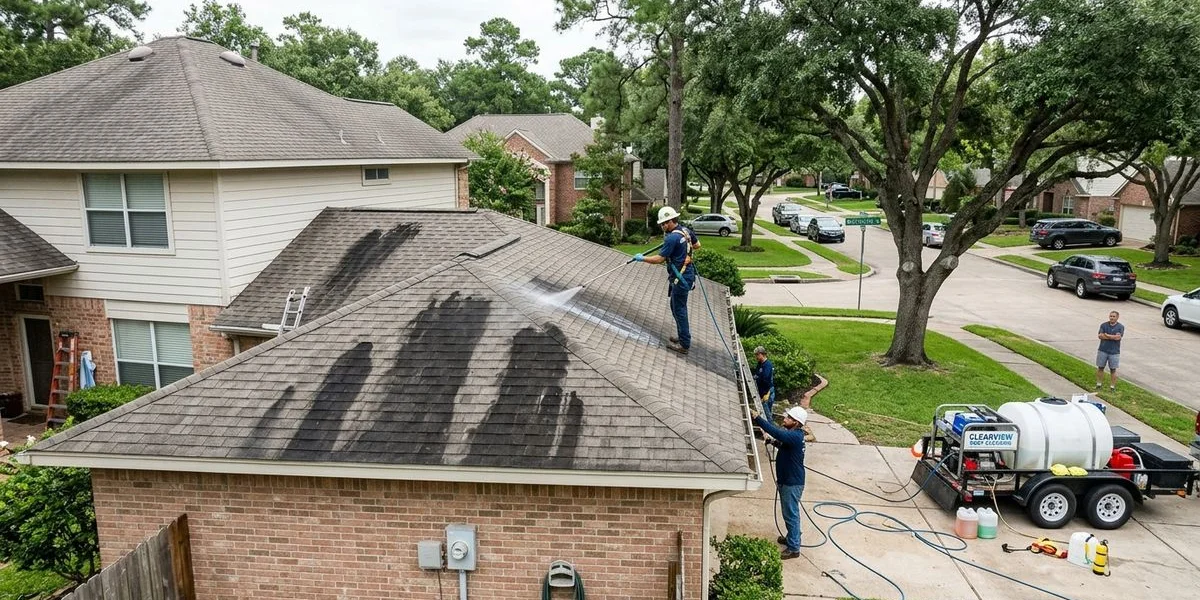
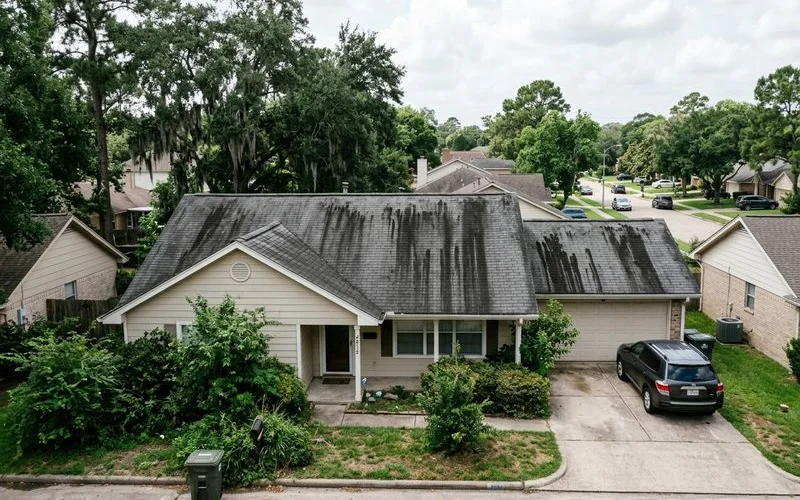
You probably see them every day on your commute, making you wonder: What Are Those Black Streaks on Your Houston Roof?
Dark stains run down neighboring roofs, and they usually start near the ridge before spreading toward the gutters. Our team at Houston Texas Power Washing provides reliable, high-quality exterior cleaning services for residential and commercial properties across the region. Many property managers assume this discoloration is just dirt or exhaust buildup.
Common misconceptions about roof stains include:
- Standard dirt blowing in from the highway
- Soot from nearby industrial exhaust
- Normal aging of the asphalt material
The truth is much more concerning.
We have seen these specific organisms slowly destroy thousands of shingles. They are an active bacterial colony feeding on your building materials.
The data reveals the exact cause of this problem. Our guide will break down why this happens and show you the exact workaround professionals use. You can save thousands of dollars with this information.
What Are Those Black Streaks on Your Houston Roof?
Those black streaks are colonies of Gloeocapsa magma. This specific organism is a cyanobacterium, which is a type of blue-green algae. It survives by feeding on the calcium carbonate found in the limestone filler of modern asphalt shingles.
This organism has been spreading across the southern United States since the 1990s. Houston sees more than 1.5 times the national average rainfall. This constant moisture creates the perfect humid incubator for algae to thrive.
Why Does It Look Black?
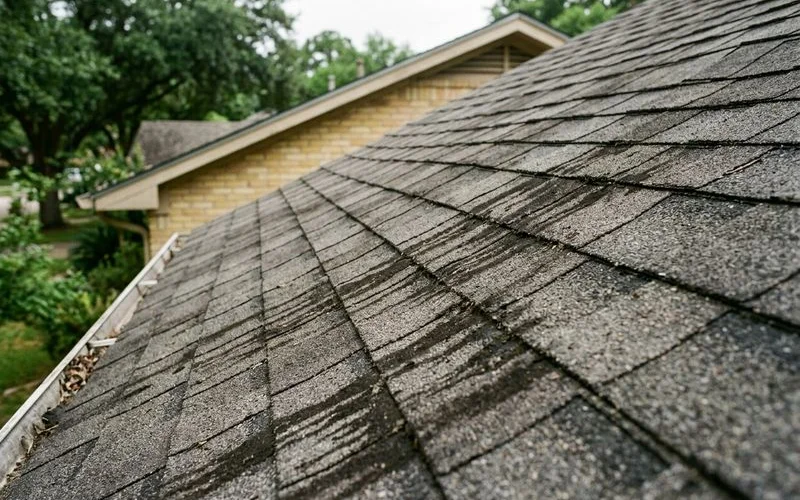
Gloeocapsa magma produces a dark pigmented sheath to protect itself from ultraviolet radiation. This biological sunscreen creates the visible black streaking on your roof.
Dark asphalt shingles often reach temperatures up to 150 degrees Fahrenheit during a Texas summer. The algae must build this heavy, dark coating to survive the intense heat and sunlight. The organism itself is actually blue-green underneath that protective layer.
How Does It Spread?
The algae reproduces through tiny airborne spores. Wind carries these spores from house to house. This explains why you often see black streaks appearing on multiple homes in the same neighborhood.
Once the spores land on a suitable surface, they colonize shaded or north-facing sections first. We frequently see heavy buildup in leafy, shaded communities like Sugar Land and Missouri City. These areas trap humidity against the roof surface.
Why You Shouldn’t Ignore Roof Algae
Many homeowners consider black streaks a purely cosmetic issue. The reality is that these colonies cause expensive structural damage.
Shortened Roof Lifespan and Granule Loss
Gloeocapsa magma actively feeds on the limestone inside your shingles. This feeding process gradually breaks down the material that gives your shingles their structural integrity.
The organisms loosen the protective mineral granules on the surface. These granules are essential for protecting the asphalt substrate from UV radiation. As granules wash away into your gutters, the underlying asphalt deteriorates rapidly.
We closely track 2026 pricing data for local repairs. The average roof replacement cost in Houston currently ranges from $8,500 to $28,000. Protecting your current shingles is much cheaper than paying $4.65 per square foot for a new roof.
Increased Energy Costs and Moisture Retention
Dark algae-covered roofs absorb significantly more heat than clean roofs. Studies show that an algae-stained roof can be 20 to 30 degrees Fahrenheit hotter than a clean one.
This extra heat forces your air conditioning system to work much harder. Cooling costs can increase by 10 to 15 percent annually due to this trapped heat. This drives up your energy bills during brutal local summers.
The algae colonies also retain moisture against your roof surface. This constant dampness encourages secondary growth like moss and lichen. These secondary organisms can lift shingle edges and cause serious leaks.
Reduced Property Value
A roof covered in black streaks looks old and neglected. This heavily reduces your home curb appeal and perceived value. Many potential buyers immediately assume a streaked roof requires a total replacement.
| Roof Condition | Average Surface Temperature | Expected Energy Impact | Curb Appeal Impact |
|---|---|---|---|
| Clean Shingles | Normal baseline | Standard cooling costs | High perceived value |
| Algae-Stained | 20 to 30 degrees hotter | 10% to 15% bill increase | Low perceived value |
| Moss-Covered | High moisture retention | High risk of attic heat | Major buyer deterrent |
The Right Way to Clean Your Roof
Cleaning an asphalt roof requires specific techniques to avoid permanent damage.
Do: Soft Wash
The only recommended method for cleaning algae from asphalt roofs is soft washing. This technique uses a low-pressure application of a specialized cleaning solution.
We apply this solution at roughly 60 PSI, which is comparable to a standard garden hose. This gentle pressure kills the algae at the root without harming the roof.
The Asphalt Roofing Manufacturers Association, also known as ARMA, explicitly recommends this exact method. They advise using a sodium hypochlorite and surfactant blend to safely dissolve the colonies.
Don’t: Pressure Wash, Scrub, or Scrape
You must never pressure wash an asphalt roof. High-pressure water causes immediate and irreversible damage. The National Roofing Contractors Association warns that aggressive DIY cleaning is dangerous and often ruins the materials.
High-pressure washing will cause the following severe issues:
- Strip protective granules away from the asphalt substrate
- Crack and dislodge individual shingle tabs
- Force water underneath the underlayment to cause interior leaks
- Void your roofing manufacturer warranty instantly
Physical scrubbing or scraping also ruins the shingle surface. The cleaning solution does all the heavy lifting, so no mechanical action is required.
How Professional Soft Wash Roof Cleaning Works
Our roof cleaning process strictly follows ARMA guidelines. This compliance ensures your property remains perfectly safe during the treatment. We utilize a proven system to restore your home exterior.
The results become visible within hours:
- Ground-level assessment: Technicians evaluate the pitch and biological growth without walking on your shingles.
- Landscape protection: The crew pre-wets and covers delicate plants to prevent chemical runoff.
- Solution application: An ARMA-compliant cleaning blend is applied at very low pressure.
- Dwell time: The solution sits for 15 to 30 minutes to kill algae at the cellular level.
- Gentle rinse: A low-pressure rinse washes debris from the ridge down to the eave.
- Complete cleanup: All surrounding surfaces receive a final clear water rinse.
Full cleaning becomes evident within one to two days. Natural rainfall washes the dead organisms away completely.
Prevention After Cleaning
After a professional soft wash treatment, several strategies can slow down future algae regrowth. You can take proactive steps to protect your investment.
- Zinc or copper strips: Installing metal strips at the ridge allows copper ions to wash down during rainstorms, naturally inhibiting algae growth.
- Algae-resistant shingles: Premium materials often contain specialized copper granules that offer 10 to 15 years of built-in protection.
- Tree trimming: Cutting back overhanging branches improves sun exposure and airflow to keep the roof dry.
When to Clean
You should schedule a cleaning as soon as you can see black streaks from the ground. The longer this bacteria grows, the more damage it causes to the limestone filler. Delaying the process makes the stains harder and more expensive to remove.
Most Houston properties benefit from professional roof cleaning every two to four years. This timeline depends heavily on tree coverage and local shade exposure. Watch for these three warning signs that indicate an immediate need for soft washing:
- Visible dark streaks spreading downward from the ridge
- Noticeable granule loss washing into your gutter system
- Neighbors scheduling roof cleaning services
Once you understand what those black streaks on your Houston roof actually are, you can take action. We are ready to eliminate those stubborn stains for good. A simple treatment restores your property value immediately.
Ready to eliminate those black streaks? Contact us for a free roof cleaning estimate. Our crew will have your roof looking like new without ever stepping on it. Your home deserves a clean, protected exterior.
Written by
Juan Hernandez Martinez
Owner & Lead Technician
Juan Hernandez Martinez is the founder of Houston Texas Power Washing, a veteran-owned exterior cleaning company serving the Greater Houston area for over 20 years.